Categories
How can drones be combined with artificial intelligence to achieve cluster control?
drone jammer and drone detector
Apr 21st,2025
920 Views
The combination of drones and artificial intelligence to achieve cluster control is a complex and cutting-edge technical field that integrates knowledge from multiple disciplines, including control theory, artificial intelligence, communication networks, etc. The following is a detailed analysis of this process:
1. Basic Concepts of UAV Swarm Control
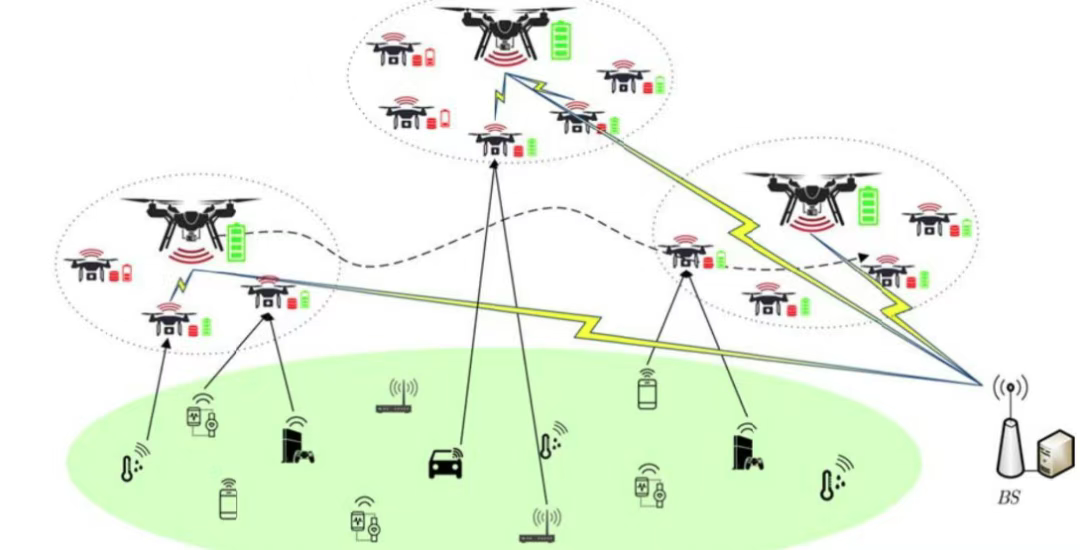
Drone swarm control refers to the coordination of the behaviors of multiple unmanned aerial vehicles (UAVs) to achieve efficient execution of complex tasks. This control method has shown great potential in civilian fields such as agricultural monitoring, environmental assessment and logistics distribution, and also has important application value in the military field.
2. The role of artificial intelligence in drone swarm control
Artificial intelligence plays a vital role in drone swarm control. It enables drones to make autonomous decisions, learn intelligently, and adapt to the environment, thereby completing various tasks more efficiently.
2.1. Autonomous decision-making:
Distributed decision-making algorithm: Distributed artificial intelligence technology is used to enable each drone to make decisions autonomously based on local information and global goals. This algorithm reduces the reliance on the central controller and improves the flexibility and robustness of the system. Task allocation and path planning: Dynamically allocate tasks and plan the optimal flight path based on task requirements and drone status. This helps avoid conflicts, improve efficiency, and ensure that drones can complete tasks collaboratively.
2.2 Intelligent learning and adaptation:
Through machine learning and deep learning technologies, drones can learn from experience and continuously optimize collaborative strategies and decision-making capabilities. This enables drones to better adapt to complex and changing environments and mission requirements.
3. Multi-source information fusion:
The drone can achieve a comprehensive perception of the surrounding environment by integrating data from multiple sensors such as radar, optics, infrared, etc. This helps to improve the adaptability and robustness of the drone in complex environments.